Executive Function: The Brain’s Self-Management
- Jan 7
- 4 min read
By Dr. Yasi Herbich
Ever wonder why some tasks are easy one day but a total struggle the next? Or why it can be so hard to start something—even when you know exactly what to do? That’s your executive function at work (or, sometimes, needing a little extra support!).

Executive function is a set of skills that help you manage your thoughts, actions, and emotions so you can get stuff done, adapt to changes, and stay on track with your goals. Think of them as your brain’s “management team”—and everyone’s team is a little different!
Here’s a breakdown of the eight core executive function skills, what they actually mean, and how they show up in real life:
Working memory

What it is: Your mental sticky note. Lets you hold and juggle information just long enough to use it—like remembering a phone number while you dial.
How to Identify:
Notice if you (or someone you support) often forget steps in a process, lose track of what you were doing mid-task, or need to ask for instructions to be repeated. Struggling to keep information in mind long enough to use it—like directions, phone numbers, or parts of a recipe—often points to challenges with working memory.
task initiation
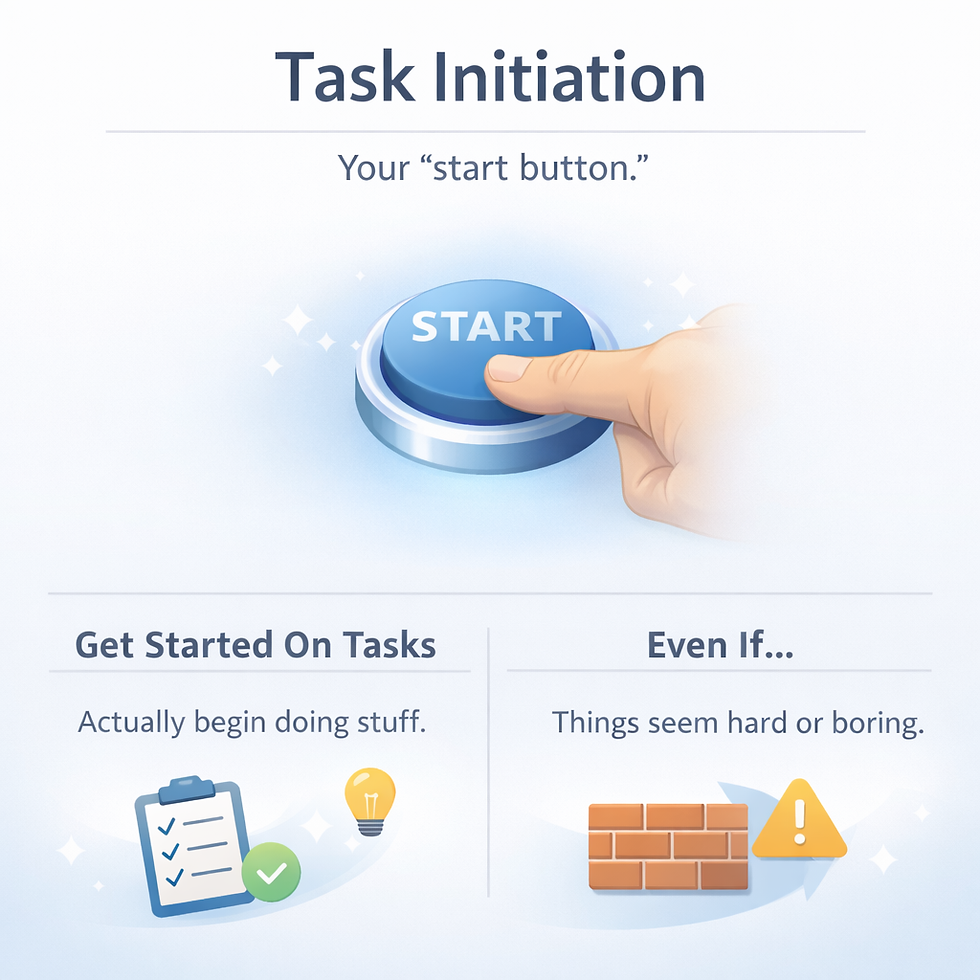
What it is: The “start button” in your brain. Helps you get going on a task, even if you’re not sure how it will go, or it’s not your favorite thing.
How to Identify:
If getting started feels like running into an invisible wall—even when you know exactly what needs to be done—that’s a sign task initiation may be tough. Look for repeated delays, lots of “I’ll do it later,” or situations where starting is the hardest part, no matter how important the task is.
cognitive flexibility

What it is: The mental “gear shifter.” Lets you adjust when plans change, try new approaches, or switch between different tasks or ideas.
How to Identify:
Pay attention to how easily you can adjust when plans change or if you have to switch gears unexpectedly. Signs of difficulty might include feeling anxious or overwhelmed by changes, getting “stuck” on one way of thinking, or needing extra time to adapt to new routines or ideas.
planning and organization

What it is: Your inner project manager. Breaks big goals into smaller steps, keeps track of priorities, and helps you keep your space (or your thoughts) organized.
How to Identify:
If large projects feel overwhelming, or you often miss steps when trying to reach a goal, planning and organization might need support. Other indicators: having trouble breaking down tasks, keeping materials or digital files sorted, or losing track of what needs to happen next.
time management

What it is: The brain’s clock. Helps you estimate how long things will take, plan your day, and meet deadlines without constant surprises.
How to Identify:
Notice if time seems to disappear, deadlines creep up, or transitions between tasks feel abrupt or stressful. Struggles in this area often show up as underestimating how long things take, consistently running late, or having trouble keeping a realistic daily schedule.
emotional regulation

What it is: The inner thermostat. Helps you manage your feelings—so you can keep thinking and acting, even when you’re stressed or frustrated.
How to Identify:
Look for situations where strong emotions quickly take over, making it hard to think or finish a task. If stress, frustration, or excitement often lead to shutdowns, meltdowns, or losing focus, there may be an opportunity to strengthen emotional regulation skills.
inhibitory control

What it is: The “pause button” (sometimes called self-control or impulse control). Helps you stop and think before acting—so you can filter out distractions, resist interruptions, and wait your turn.
How to Identify:
If you find it hard to pause before acting or speaking, or you’re easily distracted by outside noises or thoughts, inhibitory control could be the challenge. Watch for frequent interruptions, difficulty waiting your turn, or acting on impulse without considering the outcome.
sustained attention

What it is: The “focus lens.” Lets you stay tuned in to a task, even if it’s not super exciting or takes a while to finish.
How to Identify:
Ask yourself if you struggle to stay focused on a task that’s not immediately interesting, or if your mind often drifts during longer projects. Trouble completing tasks, frequent daydreaming, or needing constant reminders to stay on track all suggest sustained attention might be an area to support.
✨why does this matter?
Everyone’s executive function profile is unique—especially if you’re neurodivergent (like ADHD or autistic). Struggling in one or more of these areas is not a character flaw or a lack of willpower. It’s just a different way of processing and managing information, and sometimes it means you need new tools, strategies, or supports.
Understanding your executive function strengths and struggles can help you:
Find systems that actually work for you
Ask for accommodations (at work or school)
Show yourself a little more compassion
Remember: Executive function is about how you do things, not who you are. And everyone can build more supportive routines with the right tools and understanding!
🌍 One Size Doesn’t Fit All — Personalized Support Matters
Every brain is different. What works perfectly for one person might not work for another—and that’s not just okay, it’s expected.
At Diversity Whisperer, we believe in helping people and families adapt executive function tools and strategies so they actually fit your life, your culture, and your goals. Whether you (or your child) thrive with visuals, checklists, interactive practice, or sensory-friendly prompts, the most effective support is always personalized.
The key is building skills and confidence in a way that feels authentic, meaningful, and safe—for you. Thriving doesn’t mean copying someone else’s way of doing things; it means finding what truly works for your unique strengths and needs.
Curious about customizing executive function strategies for yourself or your family?


Comments